YouTube New Monetization Policy 2027: What Creators in India Need to Know
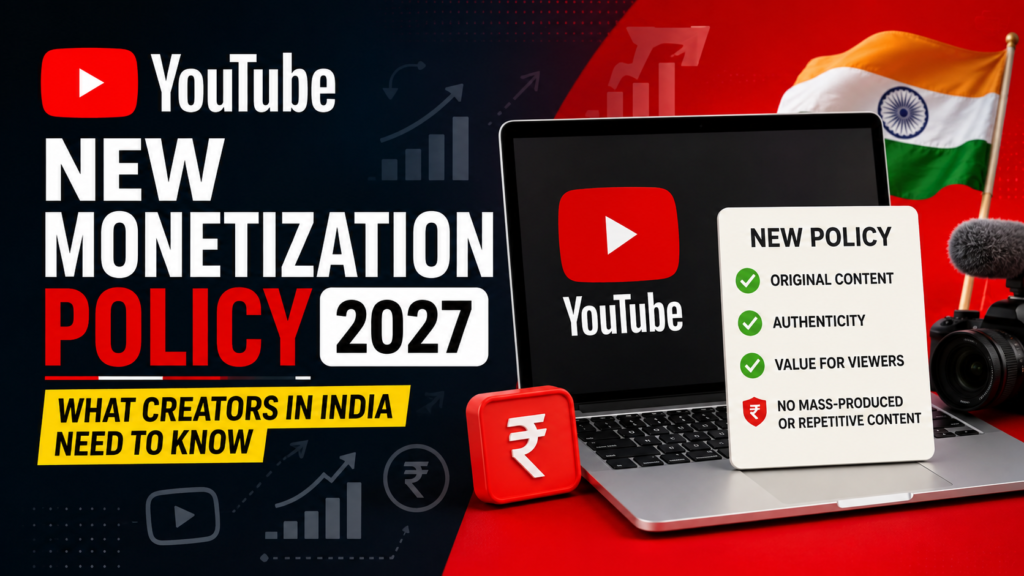
Quick Read: YouTube New Monetization Policy 2027
YouTube’s monetization rules are increasingly focused on original, authentic, and valuable content. Although there is currently no separate official “YouTube Monetization Policy 2027,” YouTube has clarified its rules around inauthentic content, including mass-produced and repetitive videos.
Creators can still use AI tools, but they should add their own ideas, research, experience, commentary, and creativity. Videos that are copied, repetitive, or produced in large quantities with little original value may face monetization issues.
For Indian creators, the best approach is to focus on quality over quantity, create useful original content, use AI responsibly, and regularly check YouTube’s latest policies.
Want to build your digital marketing and content creation skills? Join Vidya Sarthi, a marketing institute, and learn practical skills to grow in the digital world.
Table of Contents
YouTube has become a popular way for Indians to share knowledge, entertainment, skills, reviews, and business ideas. For many creators, YouTube is also a source of income. But as more people use AI tools and automated systems to create videos, YouTube is becoming more careful about the type of content it allows for monetization.
If you are a YouTuber or planning to start a channel in 2027, you may have heard about the “new YouTube monetization policy 2027.” So, what does it actually mean?
It is important to clarify that YouTube’s official information currently available does not announce a separate “2027 monetization policy.” The major recent change came on July 15, 2025, when YouTube clarified its existing rules around repetitive and mass-produced content and renamed the policy from “repetitious content” to “inauthentic content.”
For creators, the main message is simple: YouTube wants original, authentic and useful content—not videos that look mass-produced or copied.
What Is YouTube Monetization?
YouTube monetization allows eligible creators to earn money from their content through the YouTube Partner Program (YPP).
However, reaching the required eligibility conditions is only one part of the process. YouTube also reviews channels to make sure their content follows its monetization policies.
YouTube says monetized content should be original and authentic. It should not be mass-produced, generic, repetitive or created mainly to get views.
This is especially important for creators who publish videos regularly using templates, AI tools, stock footage or content collected from other sources.
What Changed in YouTube’s Monetization Policy?
The July 2025 update clarified YouTube’s long-standing rules about repetitive content.
YouTube explained that content that is repetitive or mass-produced can be considered “inauthentic content” and may not be eligible for monetization. YouTube also made clear that this was a clarification of an existing policy, rather than a completely new monetization rule.
This means creators should not assume that uploading a large number of similar videos will automatically help them earn more money.
For example, imagine a channel uploads 100 videos using almost the same template. Only the topic or a few words are changed in every video. If the videos offer little original value, they may face monetization problems.
Will AI-Generated Videos Be Monetized?
This is one of the biggest questions among creators in India.
The answer is: AI itself is not automatically the problem.
YouTube’s current monetization guidance focuses on whether the final content is original, authentic and valuable to viewers. Its examples specifically include AI-generated content that uses generic or unoriginal templates and gives the impression of mass production without the creator’s original insights or perspective.
At the same time, YouTube says automated tools can be used when the final video demonstrates the creator’s creative vision and provides educational or entertainment value.
So, using AI for:
Research and idea generation
Script assistance
Editing
Captions
Visual creation
Brainstorming
does not automatically mean a video cannot be monetized.
The important point is how you use AI.
If you simply generate hundreds of similar videos with little human input, your channel may have a higher risk of being considered inauthentic.
What Type of Content Can Create Problems?
Creators should be careful with content that looks repetitive, copied or mass-produced.
According to YouTube’s current monetization guidance, examples of problematic content can include:
Similar videos with very little variation
Template-based videos with minimal original value
Image slideshows with little or no narration
Scrolling text with limited educational or commentary value
Mass-produced AI content using generic templates
Content copied from other sources without meaningful changes
Videos that do not provide a clear original perspective
For example, a creator may take news articles from different websites, put the text into an AI voice generator, add stock images and upload the video every day.
Even if the channel gets views, this type of content can create monetization concerns if it does not provide enough original value.
What Content Is More Likely to Be Safe?
The best approach for creators is to make every video useful and different in substance.
YouTube allows channels to follow a similar format as long as the actual content provides meaningful variation and creative, educational or entertainment value. For example, having the same introduction and outro in every video is allowed when the main content is different.
A good YouTube video should therefore include your own:
Experience
Opinion
Explanation
Research
Story
Commentary
Examples
Teaching style
Creative ideas
For Indian creators, this can actually be a big opportunity.
Instead of making a generic video about “digital marketing,” you could explain digital marketing for small businesses in Jaipur, share examples from Indian businesses, or explain strategies in simple Hindi-English language.
This makes your content more useful and more connected to your audience.
What About Reused Content?
The 2025 clarification did not change YouTube’s reused-content policy. YouTube specifically stated that there was no change to its reused content policy, which covers areas such as commentary, clips, compilations and reaction videos.
This means using someone else’s content does not automatically make a video impossible to monetize, but creators need to add meaningful original value where required.
For example, a reaction video with genuine commentary and analysis is different from simply uploading someone else’s video with minimal changes.
The key question is: What are you adding to the content?
How Can Indian Creators Prepare for 2027?
Even though there is currently no officially announced separate “YouTube monetization policy 2027,” creators can prepare for future policy changes by following the direction of YouTube’s current rules.
1. Focus on Original Content
Do not build your entire channel around copying popular videos.
Study successful creators, but develop your own presentation style.
2. Use AI as a Tool
AI can help you work faster, but don’t let automation replace your creativity.
Use AI for assistance and then add your own research, examples, opinions and presentation.
3. Avoid Mass Production
Uploading many videos is not useful if every video looks almost identical.
Quality and viewer value should come before quantity.
4. Add Your Own Voice
Your experience can make a big difference.
Whether you are teaching English, reviewing products, explaining finance, creating educational videos or making entertainment content, your personal perspective can make your videos more authentic.
5. Keep Learning YouTube Policies
YouTube policies can change over time. Always check the official YouTube monetization guidelines before making important decisions about your channel.
Conclusion
The biggest lesson for YouTubers going into 2027 is simple: don’t depend on copied, repetitive or mass-produced content.
There is currently no official YouTube announcement that introduces a separate “2027 monetization policy.” Instead, the latest major clarification focuses on inauthentic content, including repetitive and mass-produced videos.
Creators who focus on original ideas, useful information, authentic experiences and strong audience value will be better prepared for changes in YouTube’s monetization environment.
Whether you are a beginner or an existing creator, now is the right time to improve your content strategy.
Want to learn digital marketing, content creation and online marketing skills? Join Vidya Sarthi , a marketing institute, and build practical skills for today’s digital world. Start learning, keep creating, and grow your digital career with the right guidance.