An introduction:
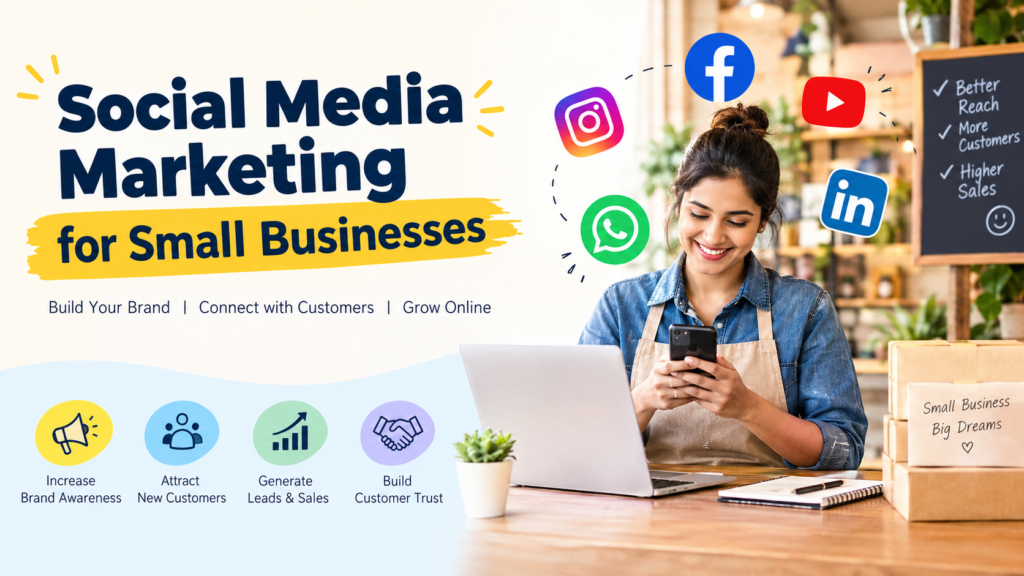
Running a small business is not always easy. You have to manage customers, products, sales, employees, and marketing at the same time. The good news is that you do not need a huge marketing budget to reach more people. Social Media Marketing for Small Businesses can help you promote your brand, connect with customers, and build trust online.
Platforms such as Instagram, Facebook, YouTube, LinkedIn, and WhatsApp give small businesses a simple way to communicate with their target audience. With the right strategy, even a local shop, home-based business, freelancer, or startup can build a strong online presence.
This guide explains how Social Media Marketing for Small Businesses works, which platforms you can use, what type of content you should create, and how you can get better results.
What is Social Media Marketing for Small Businesses?
Social Media Marketing for Small Businesses means using social media platforms to promote a business, its products, or its services.
Instead of depending only on traditional advertising, small businesses can use social media to:
- Introduce their brand to new customers
- Promote products and services
- Share useful information
- Answer customer questions
- Build relationships with followers
- Generate leads and sales
- Increase website traffic
- Build customer trust
The biggest advantage is that businesses can start with a small budget. Organic posts, short videos, stories, and customer interactions can all support your marketing efforts.
Why is Social Media Marketing Important for Small Businesses?
Social media has become an important part of how people discover and research businesses. Customers often check a business’s social media profiles before making a purchase.
A strong social media presence can help your business in several ways.
1. Build Brand Awareness
People cannot buy from your business if they do not know it exists. Regular social media content helps more people discover your brand.
For example, a local bakery can share photos of cakes, customer reviews, behind-the-scenes videos, and festival offers. Over time, this content can make the bakery more familiar to potential customers.
2. Reach Your Target Audience
Social media platforms allow businesses to reach specific groups of people based on factors such as interests, location, and online behaviour.
This is especially useful for small businesses because they can focus their marketing on people who are more likely to become customers.
3. Build Customer Trust
People want to know who is behind a business. Social media gives you an opportunity to show the human side of your brand.
You can share:
- Customer testimonials
- Product demonstrations
- Team introductions
- Behind-the-scenes content
- Frequently asked questions
- Business achievements
This can make your brand feel more genuine and trustworthy.
4. Generate Leads and Sales
Social media is not only about getting likes and followers. It can also support business growth.
You can encourage people to:
- Visit your website
- Send a WhatsApp message
- Fill out a form
- Book a service
- Visit your store
- Purchase a product
Therefore, every post should have a clear purpose.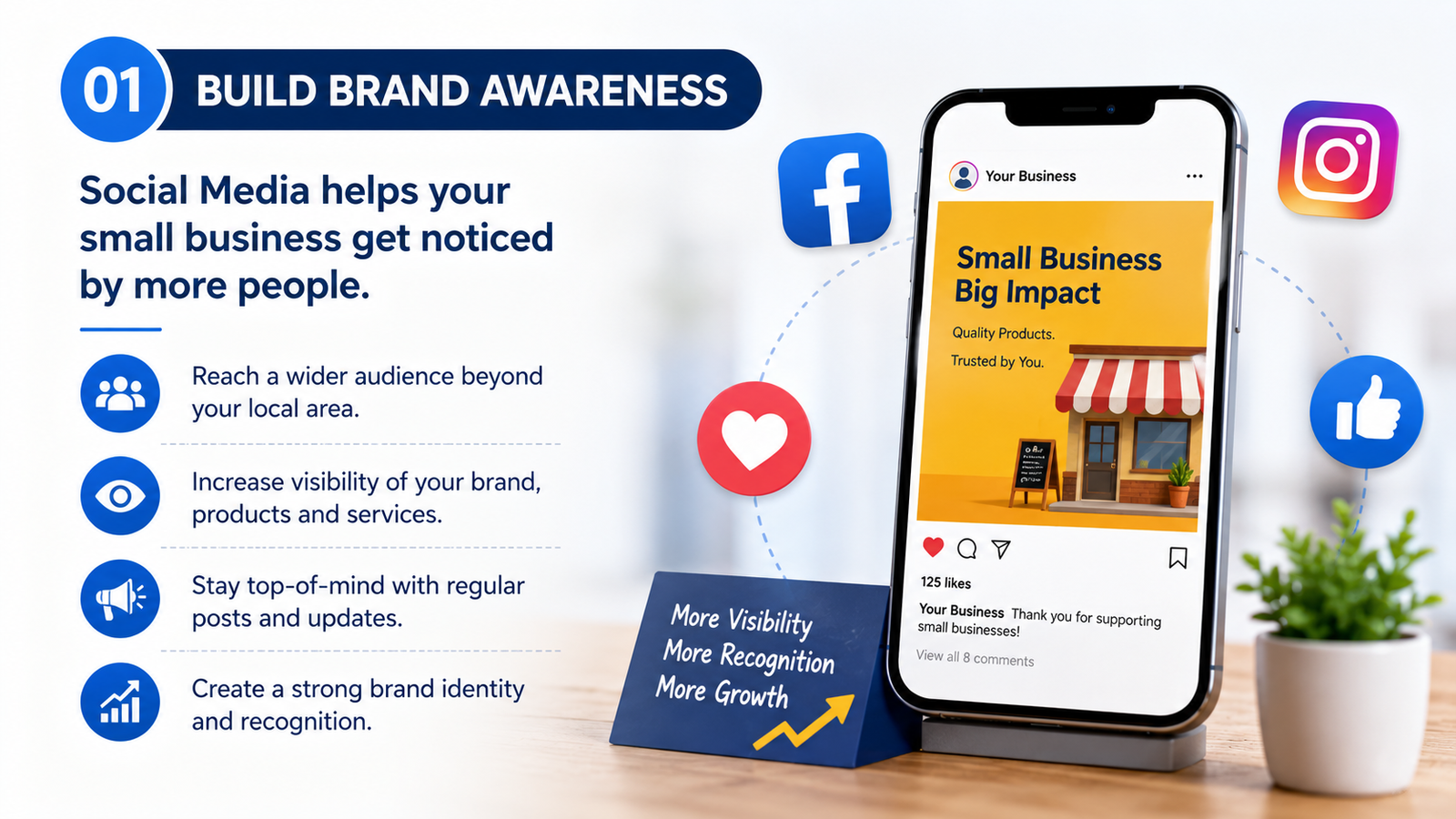
Which Social Media Platforms Should Small Businesses Use?
One common mistake is trying to be active on every platform. A better approach is to choose platforms where your target customers are already spending time.
Instagram is useful for businesses that depend on visual content. Fashion brands, restaurants, beauty businesses, fitness coaches, photographers, and many local businesses can benefit from it.
Use:
- Reels
- Stories
- Carousels
- Product photos
- Customer-generated content
Facebook can be useful for local businesses, communities, and businesses targeting a broad audience.
You can use Facebook to share updates, offers, educational posts, customer reviews, and events.
YouTube
YouTube is useful when your business can explain, demonstrate, or teach something through video.
For example, a digital marketing institute can publish tutorials, career tips, student experiences, and educational videos.
LinkedIn is particularly useful for B2B businesses, consultants, agencies, recruiters, and professionals.
Businesses can share industry knowledge, company updates, case studies, and professional insights.
WhatsApp can be useful for customer communication and follow-ups. Businesses can use it to answer questions, share updates, provide support, and communicate with interested customers.
The important thing is not to choose a platform simply because it is popular. Choose the platforms that match your audience and business goals.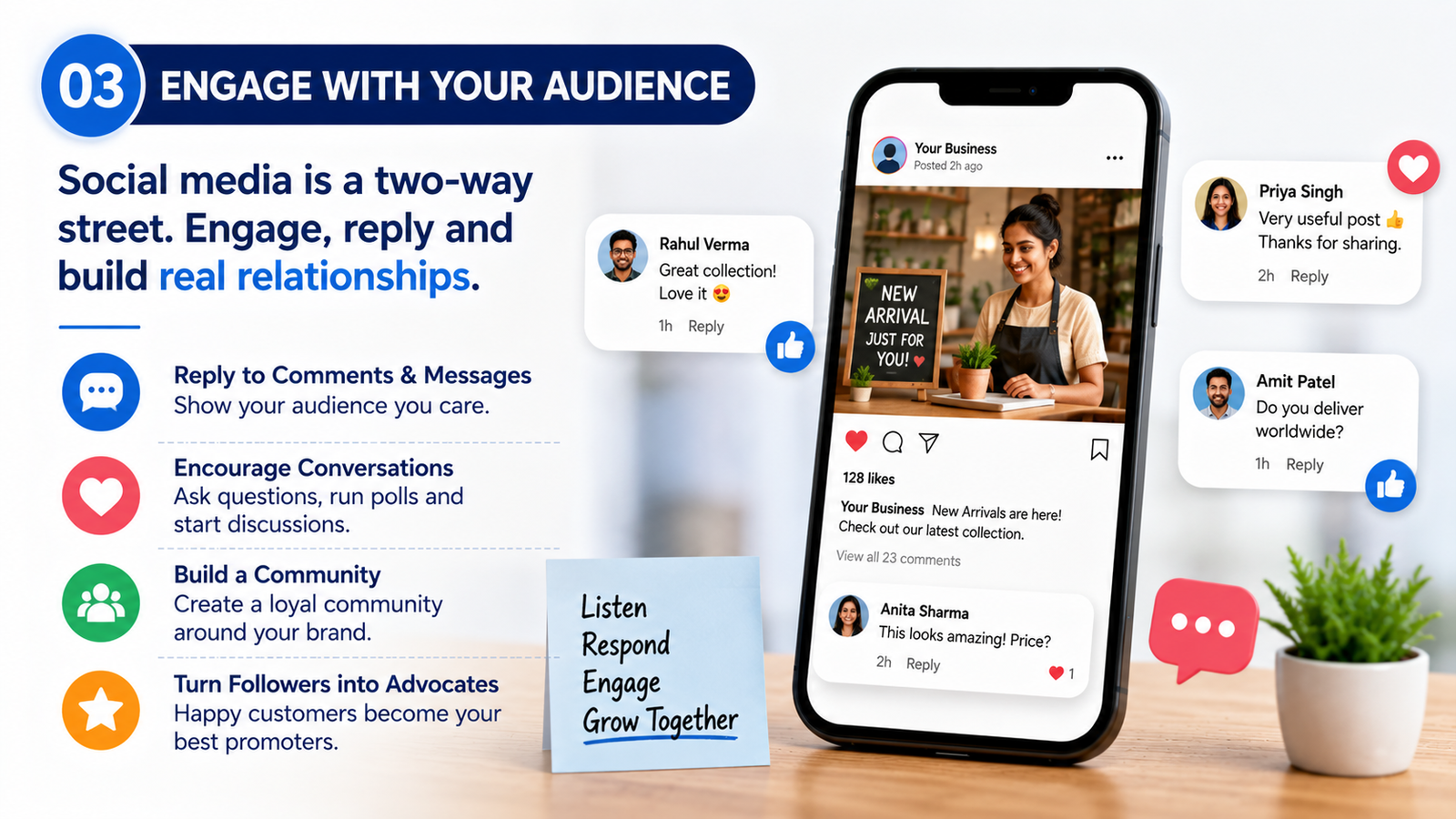
How to Create a Social Media Marketing Strategy
A clear strategy makes Social Media Marketing for Small Businesses more organised and effective.
Step 1: Define Your Goal
First, decide what you want social media to achieve.
Your goal could be:
- Increasing brand awareness
- Getting more leads
- Increasing website visits
- Generating sales
- Building a community
- Improving customer relationships
A clear goal helps you decide what content to create.
Step 2: Understand Your Audience
Think about your ideal customer.
Ask yourself:
- Who are they?
- What problems do they have?
- What products or services do they need?
- Which social platforms do they use?
- What type of content do they enjoy?
Understanding your audience makes your content more relevant.
Step 3: Create Useful Content
Good social media content should provide value instead of constantly asking people to buy.
You can create different types of content, such as:
- Educational tips
- How-to videos
- Product demonstrations
- Customer stories
- FAQs
- Industry updates
- Behind-the-scenes posts
- Offers and discounts
- Polls and questions
A simple content mix can keep your social media page interesting.
Step 4: Create a Content Calendar
Posting randomly can make your marketing inconsistent. A content calendar helps you plan your posts in advance.
For example:
Monday: Educational tip
Tuesday: Product or service post
Wednesday: Short video
Thursday: Customer testimonial
Friday: Frequently asked question
Saturday: Behind-the-scenes content
Sunday: Offer or community post
You do not have to follow this exact schedule. The important thing is to create a realistic schedule that you can maintain.
Common Mistakes to Avoid
Small businesses often make a few common social media mistakes.
Posting Only Promotional Content
If every post says “Buy Now,” followers may lose interest. Balance promotional content with useful and entertaining information.
Trying to Be Everywhere
Managing five or six platforms without enough time can reduce content quality. Start with one or two platforms and expand when you are ready.
Ignoring Comments and Messages
Social media is a two-way communication channel. Reply to questions, comments, and messages whenever possible.
Focusing Only on Followers
A large follower count does not automatically mean more sales. Engagement, leads, customer relationships, and conversions are often more useful business metrics.
Giving Up Too Early
Social media growth usually takes time. Consistency matters more than expecting overnight results.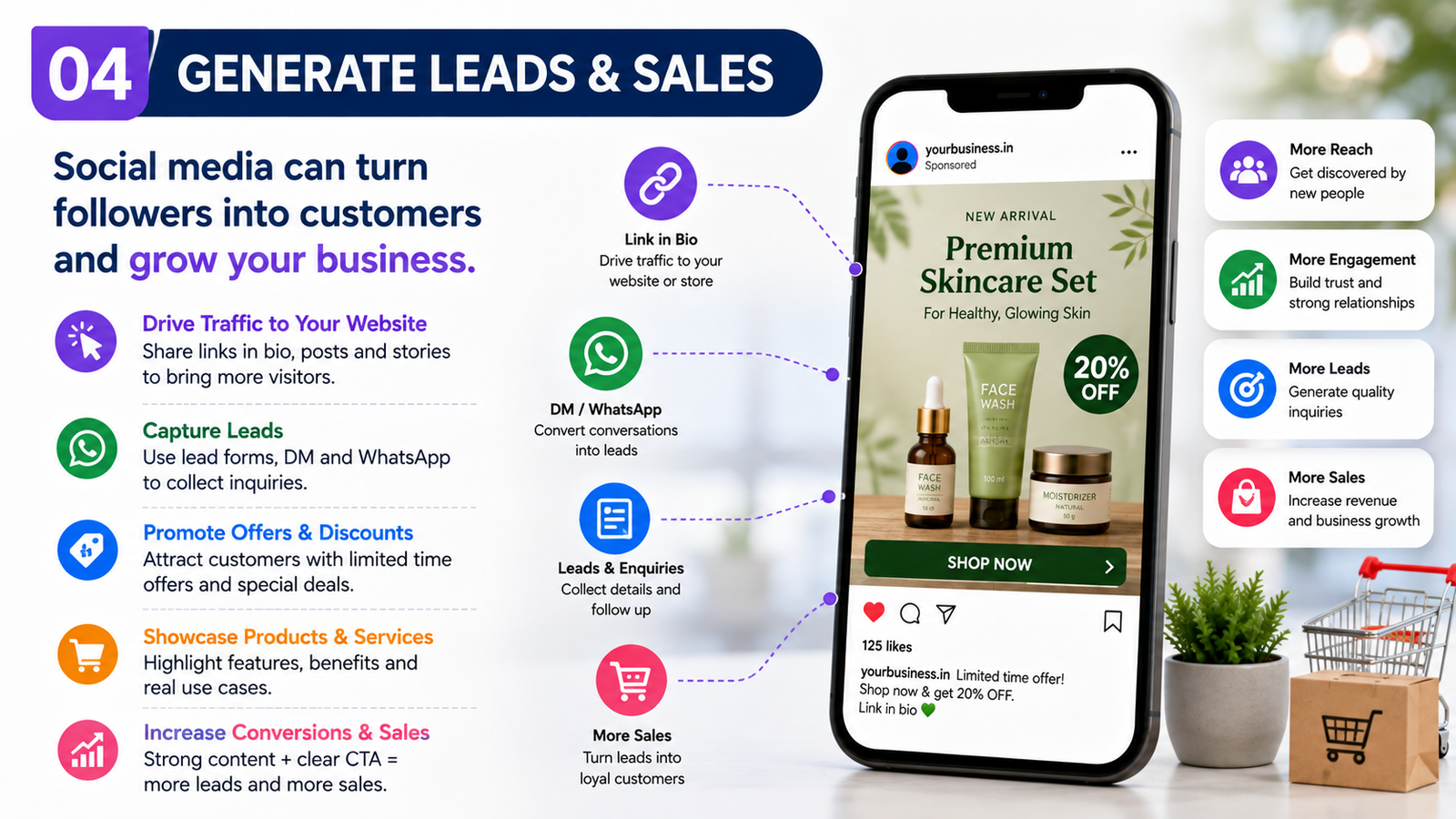
How to Measure Social Media Marketing Results
You should regularly check whether your efforts are helping your business.
Important metrics include:
- Reach
- Impressions
- Engagement
- Website clicks
- Leads
- Messages
- Video views
- Conversions
- Sales
For example, if a post receives many views but generates no enquiries, you may need to improve the call to action or target a more relevant audience.
Testing different content formats can help you understand what works best for your customers.
Conclusion
Social Media Marketing for Small Businesses provides an affordable way to build visibility, communicate with customers, and support business growth. You do not need expensive equipment or a massive advertising budget to get started.
Start by choosing the right platform, understanding your audience, creating useful content, and maintaining a consistent posting schedule. Most importantly, focus on building real relationships instead of chasing likes and followers.
Social media works best when it becomes a regular part of your overall marketing strategy.
Start learning with vidya sarthi
Vidya Sarthi can help you build practical digital marketing knowledge through structured learning and industry-focused training. Take the next step, improve your digital skills, and learn how to turn online platforms into valuable opportunities.
Start learning with Vidya Sarthi today and build the skills you need for the digital world.